
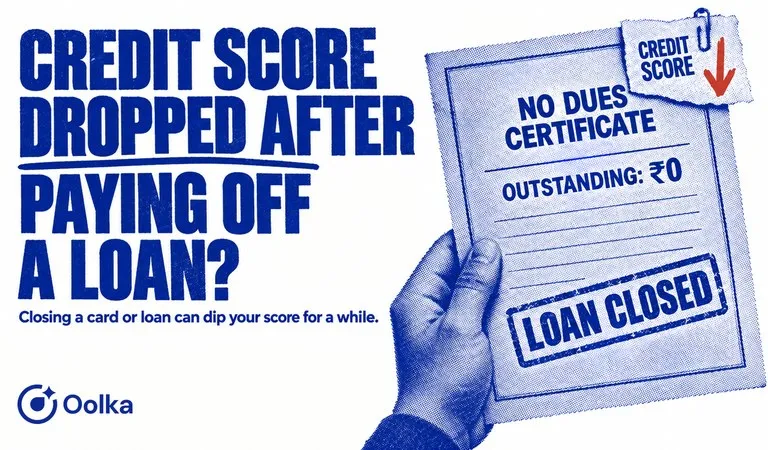
Paying off debt can lower your credit score for a while when an account closes: a card you close takes its limit with it, and a closed loan changes the mix of credit you’re managing. Closing a loan also changes how lenders and credit bureaus assess your outstanding debt. The drop does not automatically mean you made a financial mistake or that the repayment was recorded incorrectly.
The impact depends on the type of debt you repaid, your remaining balances, the age of your accounts, and when credit bureaus such as Experian India, Equifax, and CRIF High Mark receive updates from lenders.
Understanding the reason behind the decline helps you decide whether to wait for routine reporting updates or challenge an actual error. Before applying for another loan, check your credit report, confirm that the repayment is recorded correctly, and identify any other changes that explain the score movement.
If your score fell without you paying anything off, read: Why Did My Credit Score Drop Without any Reason?
Why Does a Credit Score Drop After Debt Repayment?
Paying off debt reduces your outstanding balance, but your credit score also depends on your credit utilisation, active accounts, and repayment history. Changes in these factors after repayment could lead to a temporary drop.
Three factors explain why:
- Credit utilisation: Paying off a credit card reduces its outstanding balance. However, closing the card also removes its credit limit, which could increase your overall utilisation if other cards carry balances.
- Active account mix: Paying off your only active personal loan changes the mix of credit you currently manage.
- Account history: Closing a loan changes its status, while its repayment history can remain on your credit report.
For example, if you pay off your only active personal loan, your outstanding debt decreases, but your active account mix changes. Depending on the scoring model and your other credit accounts, this change could contribute to a lower score.
Does Paying Off Credit Cards Help Credit Score?
Paying down a credit card balance typically helps the utilisation component of your score, particularly when the balance was close to the card’s limit. However, the timing of the update and whether you close the account affect the outcome.
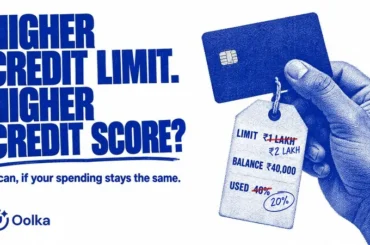
If you’re asking “does paying off credit card increase credit score?”, it usually does, as long as you clear the balance and keep the card open. Keeping a paid-off card open, provided its terms and fees make sense, preserves its available limit. Closing it reduces that limit and could increase utilisation on your remaining cards.
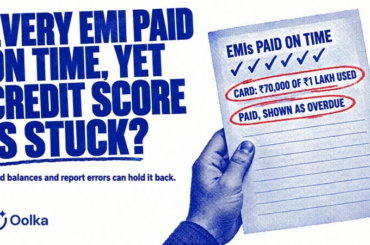
Consider a card with a ₹1 lakh limit and a ₹70,000 balance. Clearing the ₹70,000 reduces utilisation on that card from 70% to zero once the lender reports the updated balance. If you close the account instead, that available limit disappears from your overall calculation.
There is no guaranteed score increase or fixed number of points. The result depends on your other accounts, reported balances, scoring model, and the timing of bureau updates.
Why Can Paying Off a Loan Hurt Your Credit Score?
If you are wondering, “does paying off a loan hurt your credit?”, the answer depends on the loan’s status, your other accounts, and the scoring model. Paying the full outstanding amount is different from negotiating a settlement for less than the amount due.
When you repay a personal loan in full, the lender should report the account as closed after processing the repayment. Your active installment debt decreases, but your account mix also changes. If the loan was your only active installment account, that change could affect your score.
A temporary decline does not cancel out the benefits of becoming debt-free. You have removed an EMI obligation and reduced your outstanding debt. Do not take another loan simply to restore a score. Instead, confirm that the lender reports the correct outstanding balance, closure date, and payment status. If those details are accurate, maintain timely payments on your remaining accounts and allow subsequent reporting cycles to reflect your updated position.
Your loan is paid off, but does your credit report say otherwise? Check for errors with Oolka for free. If the lender has reported incorrect information, Oolka raises the dispute, sends the necessary emails, and makes the follow-ups until a response is received.
Why Does a Closed Loan Still Affect Your Score?
The question “why does paying off a loan hurt credit?” deserves a closer look when the account shows zero outstanding but your score has fallen.
A closed account does not instantly disappear from your credit report. Its repayment history and account details remain part of the information credit bureaus use, subject to their reporting and retention practices. The scoring model also considers changes to your active accounts and overall credit activity.
Check the following details before assuming the decline is a normal consequence of repayment:
- Outstanding balance: The repaid amount should no longer appear as an unpaid balance.
- Account status: The lender should report the loan as closed when all contractual dues are paid.
- Payment history: Verify that no incorrect late-payment entry remains.
- Recent enquiries: Check whether a loan or credit card application created a new enquiry near the date of the decline.
A wrong overdue amount or an incorrectly reported missed EMI deserves a dispute. A lower score without reporting errors calls for patience and consistent repayment behavior, not another borrowing commitment.
How Long Does Recovery Take After Repayment?
There is no universal recovery date. Many individuals ask, “how long after paying off debt does credit improve?” The answer depends on when the lender reports the repayment, when the bureau updates the report, and what caused the original decline.
Lenders submit account information to credit bureaus. Those bureaus maintain separate records, so the same account details or score changes do not necessarily appear simultaneously across every bureau.
Use this sequence to track progress:
- Immediately after repayment: Save the payment receipt, loan closure letter, or no-dues certificate.
- After the lender’s reporting cycle: Check whether the balance and account status have changed.
- After the report updates: Review your score and account details again. If the information remains incorrect, raise a dispute with the lender and relevant bureau.
Do not judge progress from a single score check. Compare the underlying report details and recent account activity. A correct report does not guarantee an immediate score increase, but it gives you a reliable basis for deciding what to do next.
What Should You Prioritise After Paying Off Debt?
The right next step depends on what changed. Use this table to distinguish a normal scoring adjustment from a problem that needs attention.
| Situation | Likely effect | Next step |
| Credit card balance cleared | Lower utilisation can support your score | Check the reported balance |
| Paid-off credit card closed | Reduced available credit can increase utilisation | Review your remaining limits |
| Personal loan closed correctly | Active account mix changes | Maintain timely payments |
| Loan still shows an overdue balance | Incorrect reporting can hurt your score | Dispute the entry |
| Loan marked settled despite full repayment | Payment status is inaccurate | Request correction from the lender |
| Score changes without reporting errors | Scoring or reporting updates could explain the decline | Monitor subsequent reports |
An AI credit monitoring tool helps you keep track of score changes and identify entries that need review.
What Should You Do When Your Score Falls Unexpectedly?
Start with the report, not a new credit application. If you want to know how to fix credit score after debt repayment, identify whether the decline comes from a legitimate scoring change or incorrect reporting.
Check your latest report for the repaid account’s balance, closure status, payment history, and any new enquiries. Compare these entries with your bank statement and closure documents. If a lender still reports an overdue amount after full repayment, ask it to investigate and correct the information it supplied.
If your credit score drops because of incorrect reporting, Oolka helps you challenge the error, draft emails to the lender, and follow up on the correction. Check your report for free. You pay only when you want Oolka to act.
Key Takeaways
Paying off debt reduces your outstanding obligations, but changes to credit utilisation and active accounts can temporarily lower your credit score. Clearing a credit card balance is different from closing the account, which reduces your available credit limit and could increase overall utilisation.
After repayment, check your credit report to confirm that the loan balance is zero, the account status is correct, and no inaccurate late-payment entries remain. If a lender reports incorrect information, raise a dispute and retain your payment receipts and loan closure documents. Continue making timely payments on remaining accounts, avoid unnecessary credit applications, and review subsequent reports to track changes in your score.
Also Read: A Complete Guide to the Credit Dispute Resolution Process
FAQs
1. Is it bad to pay off a loan early?
No. Paying off a loan early reduces debt and future interest obligations, subject to any applicable prepayment charges. Check your loan agreement and obtain written confirmation of closure. A short-term score decline does not automatically outweigh the financial benefit of eliminating the debt.
2. How long does it take for a credit score to recover after paying off debt?
There is no fixed timeline. The result depends on reporting updates, account changes, and the reason for the decline. Review your report after the lender updates it, then track subsequent changes rather than expecting a guaranteed recovery date.
3. Does paying off a credit card lower my credit score?
Clearing the balance alone reduces utilisation and supports responsible credit management. Closing the card also removes its available limit, which could increase utilisation across your remaining cards. Keeping an account open is worth considering if its fees and terms make sense.
4. Why is my credit score lower even though my loan shows as closed?
Closure changes your active accounts and could affect your account mix. If the balance is zero and the payment history is correct, the decline could reflect scoring changes. If the report contains an incorrect overdue amount or missed payment, dispute it.
5. What is the difference between “closed” and “settled” on a credit report?
Closed means the loan has been paid off according to the agreed terms. Settled generally indicates that the lender accepted less than the full amount owed to resolve the debt. A settlement can negatively affect how lenders assess your repayment history. Verify the status with your lender if you paid the full amount.
6. How can I protect my credit score when paying off debt?
Pay every remaining EMI and credit card bill on time, keep card utilisation under control, avoid unnecessary credit applications, and review your credit reports after repayments.