
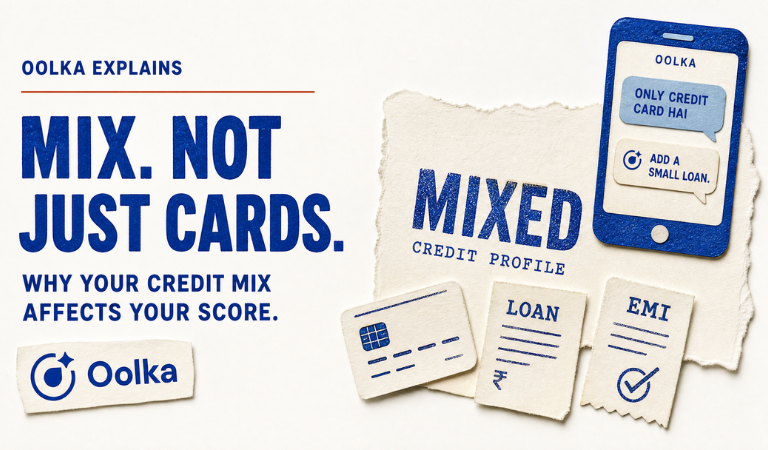
You have a credit card. You also took a personal loan last year. Still, your credit score is not moving much. Reason: credit mix.
Credit mix refers to the combination of secured and unsecured credit accounts in your profile. Lenders evaluate this because it helps them understand how responsibly different types of credit are managed over time.
Naman, 30, from Punjab, had a stable income of ₹65,000. No missed payments. Yet his credit score stayed stuck around 710. The issue was not repayment. It was his credit mix.
Banks don’t just look at how you repay. They also look at what types of credit you use.
That is where understanding credit score meaning becomes important. It is not only about payments. It is about overall credit behaviour.
What is Credit Mix in Credit Evaluation
Credit mix means the mix of various credit accounts in your profile. These may include secured credit, such as a home or car loan, and unsecured credit, such as a personal loan or a credit card.
Lenders prefer a balanced mix because it shows experience in handling different types of credit responsibly.
A profile with only one type of credit may give lenders limited insight into how different forms of credit are managed.
Common examples of credit types include:
- Home loans
- Car loans
- Personal loans
- Credit cards
- Consumer durable loans
A credit mix does not necessarily refer to having several loans. It is about maintaining a balanced credit profile over time.
Real Story: Good Score, Weak Credit Structure
Pankaj, 33, from Mumbai.
Starting point: Credit score 742. Higher interest rate than expected.
He had two personal loans, no credit card, and very limited credit variety. Repayments were on time, but his profile relied heavily on one type of borrowing.
What happened next:
- Day 1: Oolka filed a dispute on the duplicate personal loan entry affecting the overall credit structure.
- Week 2: Oolka drafted an objection email to the lender, highlighting the weak credit mix and profile imbalance.
- Month 2: Oolka followed through until the credit card was added.
Result: Better loan offers and improved approval strength.
Lesson: A good score alone is not enough. Lenders also evaluate how balanced your credit profile is.
Also Read: Does Paying Only the Minimum Amount on Your Credit Card Hurt Your Credit Score?
Credit Mix vs Credit Utilization: What’s the Difference
| Factor | What It Means | What Lenders Check | Impact on Credit Score |
| Credit Mix | The combination of secured and unsecured credit accounts in your profile | Whether you can manage different types of credit responsibly | A balanced mix can strengthen your profile over time |
| Credit Utilization | The percentage of available credit currently being used | How heavily you depend on borrowed credit | Consistently high utilization can reduce your score |
Credit mix shows the variety of credit in your profile, while utilization shows how responsibly available credit is being used.
Both are evaluated together during loan and credit card approvals.
How Credit Utilization Impacts Credit Score
Credit mix and credit usage are different factors, but both affect your profile.
Credit utilization shows how much of your available credit is being used.
To understand it clearly, you need to know how is credit utilization calculated. It is calculated by comparing used credit against the total available limit.
For reference on how credit behaviour is assessed in credit reporting systems, you can refer to official bureau guidelines: www.cibil.com
For example, if your total limit is ₹1,00,000 and your usage is ₹40,000, your utilization rate is 40 percent.
Why High Credit Usage Reduces Your Score
When credit usage stays high consistently, lenders may see it as higher dependence on borrowed money.
This explains why does higher credit utilization decrease your credit score over time.
Many borrowers ask is high credit utilization bad, especially when payments are on time. The answer is yes if usage remains high regularly.
Consistently high credit utilization can lower your score even without missed payments.
What is Considered Healthy Credit Usage
The credit utilization rate is one of the most closely watched parts of a credit profile.
Many lenders consider optimal credit utilization below 30 percent healthier for long-term credit management.
Lower usage usually signals better financial control and improves overall credit behaviour.
For regulatory context on how credit data is governed and shared across credit information companies in India, refer to RBI guidelines: www.rbi.org.in
Good credit usage habits include:
- Paying dues before the due date
- Keeping usage below 30 percent
- Avoiding maxing out cards
- Spreading expenses across cards when needed
How Long Credit Utilization Affects Your Score
Credit utilization changes every month based on usage and billing cycles.
This is why people ask how long does credit utilization affect score.
Its impact continues as long as high usage is reported. Once balances reduce and lower usage continues consistently, the impact gradually decreases in future reporting cycles.
Also Read: How To Improve Credit Score Using AI?
How Credit Mix and Utilization Work Together
Credit mix shows credit variety. Utilization shows credit discipline.
A stronger profile usually includes:
- Balanced credit types
- Controlled usage
- Consistent repayments
- Stable repayment history
Both factors have an impact on your profile, and they are considered by lenders together with payment behavior and general financial history.
How to Improve Credit Score Through Better Credit Management
Improving your score is not only about paying on time. Credit structure and usage also matter.
Here are practical ways to build a stronger profile:
- Maintain lower credit usage
- Avoid depending on one type of credit only
- Keep older accounts active when possible
- Avoid applying for multiple loans together
- Build credit gradually over time
These habits ensure you are not always asking how to improve credit score. Rather, you know how it happens.
How Oolka Identifies Credit Usage and Mix Issues
A low score is not always caused by missed payments. Sometimes the issue is high usage or an unbalanced credit profile.
Here’s what happens on Oolka:
Step 1: Oolka scans your full credit profile and breaks down credit usage patterns affecting your score
Step 2: It surfaces accounts with consistently high usage that are pulling down your profile
Step 3: It maps your credit structure and exposes overdependence on a single credit type
Step 4: It compiles the key factors reducing overall score strength into a clear view
Step 5: It follows through with lenders for profile changes as your usage and credit behaviour improve
Most people only see the score. This shows what is actually affecting it.
The Bottom Line: The Impact of Credit Mix
Credit mix is not about having more loans. It is about maintaining a balanced credit profile.
What you need to know:
- Credit mix affects overall profile strength
- High utilization can reduce your score
- Balanced credit behaviour improves approvals
- Repayment history alone is not enough
An improved credit profile is developed by making responsible use of credit, maintaining a balance in borrowing and repaying on schedule.
Oolka breaks down your credit report and flags high utilisation, weak credit mix, and gaps affecting your score. It translates these issues into clear actions so nothing is left unresolved in your credit profile.
It files disputes for incorrect entries, drafts objection emails for mismatched records, and follows through with lenders until the corrections are processed.
FAQs
1. What does credit mix mean in a CIBIL report?
Credit mix is defined as the combination of both secured and unsecured credit accounts that are in your credit profile. This includes loans and credit cards.
2. Why is credit mix important for your credit score?
It helps the lender in evaluating how effectively you are able to handle different types of credit over time.
3. What is considered a healthy credit mix?
A healthy mix usually includes both secured and unsecured credit managed responsibly.
4. Is having only secured loans enough for a good credit mix?
It can support your profile, but having only one type of credit may provide limited repayment behaviour data.
5. Does Buy Now, Pay Later (BNPL) count in your credit mix?
Some BNPL accounts may appear as unsecured credit depending on how the lender reports them.
6. Will getting a second credit card improve your credit mix?
Getting a second credit card will not improve your credit mix because both accounts fall under the same category of unsecured credit. However, it may help improve your credit utilisation if used responsibly, which can indirectly support your credit score over time.
7. How can you improve your credit mix in CIBIL?
You can improve it by maintaining a balanced combination of credit types and managing them responsibly.
8. Will closing an old credit card affect your credit mix?
Yes, it can affect credit history length and overall available credit, which may impact your score.
9. How quickly does opening a new credit account impact your credit score?
A new account can start affecting your score once it is reported to credit bureaus during the next reporting cycle.