

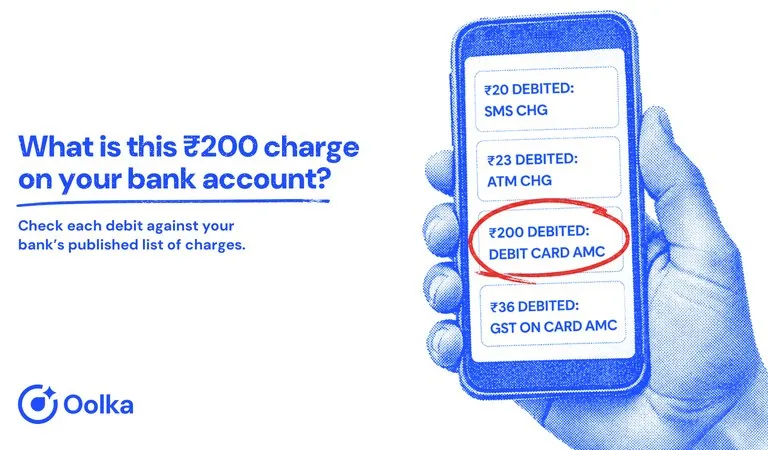
You can track bank charges and hidden deductions by reviewing your account statement, checking transaction descriptions, comparing debits with your bank’s official fee schedule and enabling transaction alerts. Banks deduct money for services such as SMS notifications, debit card maintenance, ATM withdrawals, minimum balance shortfalls and failed standing instructions. These deductions are not always obvious because transaction descriptions frequently use abbreviations or internal banking codes.
If you maintain savings accounts, review the charges associated with each account instead of assuming every deduction is a transaction you authorised. Even small fees of ₹20, ₹50 or ₹150 add up when they recur monthly, quarterly or annually.
The key is to distinguish between legitimate service fees, automatic payments, penalties and incorrect deductions. Checking your statements regularly helps you identify the reason for each debit, verify whether the amount matches the bank’s published charges and challenge entries that should not have been applied.
Which Bank Deductions Should You Watch Closely?
Not every deduction from your account is a purchase or transfer. Banks collect fees for maintaining accounts and providing services. Some charges appear once a year, while others recur whenever you use a particular facility or fail to meet an account condition.
Start by checking these common deductions:
| Charge category | Examples of deductions | When to check |
| Minimum balance | Non-maintenance penalties | When the required balance is not maintained |
| Debit card | Annual or replacement fees | Monthly statement or card anniversary |
| ATM usage | Charges beyond the free transaction limit | After additional ATM transactions |
| SMS alerts | Notification service fees | Monthly or quarterly |
| Account services | Cheque book, demand draft and statement fees | After requesting a service |
| Failed payments | Return charges for bounced cheques or failed mandates | After a payment failure |
| GST | Tax applied to eligible banking services | Alongside the underlying service fee |
Your bank account charges depend on the account type, location, balance requirements and services you use. A basic savings account and a premium savings account do not necessarily follow the same fee structure.
For instance, a bank might collect an annual debit card fee of ₹200 plus applicable GST. If you do not recognise the deduction, check the card’s fee schedule and the date of issuance or renewal before raising a complaint.
If your balance drops below the minimum, RBI requires the bank to tell you by SMS, email or letter and give you at least a month to top it up. The penalty also can’t take your balance below zero.
How Do You Check the Reason Behind an Unfamiliar Deduction?
Your account statement is the first place to investigate an unexplained debit. Open your mobile banking app or net banking account and review the transaction history for the period in which the money was deducted.
Pay attention to the transaction date, amount, narration and transaction reference number. Bank statements frequently use shortened descriptions, so a debit labelled AMC, SMS CHG, NACH RTN or GST might not immediately explain the service involved.
Here’s how to check bank charges on your account:
- Open your account statement and locate the debit.
- Note the exact amount and transaction description.
- Check whether the deduction is recurring or a one-time charge.
- Compare the amount with the bank’s published schedule of charges.
- Contact customer care if the description does not identify the service.
Do not assume every unfamiliar debit is fraudulent. It could be an authorised service fee, an automatic payment or an incorrect deduction. Establish the reason before disputing it.
Where Can You Find Your Bank’s Official Fee Schedule?
Every bank publishes a schedule of charges covering its savings accounts, current accounts, debit cards and additional services. This document is the reference point for checking whether a deduction is valid.
You can find it on your bank’s official website, usually under sections such as Service Charges, Fees and Charges or Schedule of Charges. Download the latest document rather than relying on an old PDF or information shared on third-party websites.
When reviewing a bank charges list, pay attention to the following details:
- Account category: Basic savings, regular savings, salary or premium account.
- Balance requirements: Minimum average balance and applicable non-maintenance fees.
- Card charges: Annual maintenance, replacement and transaction fees.
- ATM limits: Free transaction limits and additional withdrawal charges.
- Service fees: Cheque book, demand draft and other account-related services.
- Taxes: Applicable GST on banking services.
For example, a ₹150 service fee with 18% GST results in a total deduction of ₹177. Check whether the bank has applied the correct fee and tax before requesting a reversal.
How Can You Prevent Repeated and Unnecessary Deductions?
Tracking deductions is only useful when you also reduce charges that you do not need to pay. Review your account conditions and banking habits to identify recurring expenses.
Start with your debit card. If you hold a card with an annual maintenance fee but rarely use its additional facilities, check whether your bank offers a lower-fee alternative. Similarly, review SMS alert subscriptions, cheque book requests and other paid services.
A few practical changes help control bank service charges:
- Maintain the required average balance to avoid non-maintenance penalties.
- Stay within your free ATM transactions. Banks must give you five a month at their own ATMs, plus three at other banks’ ATMs in metro cities or five in other cities, balance checks included. After that, RBI caps the fee at ₹23 a transaction, plus tax.
- Avoid repeated cheque or auto-debit failures by maintaining sufficient funds.
- Check whether your salary account has converted into a regular savings account after employment changes.
- Cancel paid services that you no longer use.
- Choose digital statements if your bank charges for physical statement requests.
You should also review automatic payments and standing instructions. A forgotten subscription or mandate can result in recurring debits that look like bank fees but are actually merchant payments.
What Should You Do When a Bank Deducts an Incorrect Charge?
If the deduction does not match the published fee schedule or the bank cannot explain it, raise a formal complaint. Keep the transaction reference number, statement entry and relevant fee schedule ready.
Follow this sequence:
- Contact the bank through its official customer care number, mobile app or branch.
- Explain the deduction and provide the transaction reference number.
- Request the exact reason for the debit and the applicable fee schedule.
- If the charge is incorrect, request a reversal and obtain a complaint reference number.
- Follow up within the bank’s stated resolution period.
- Escalate the complaint to the bank’s grievance redressal officer if the response is unsatisfactory.
If the bank does not resolve the complaint within 30 days, or you are dissatisfied with its response, you can approach the RBI through its Complaint Management System, subject to the applicable eligibility conditions.
Keep written records of every complaint and response. These documents help establish when you reported the issue and what resolution you requested.
How Can Technology Help You Track Account Deductions?
Checking every transaction manually becomes difficult when you operate multiple bank accounts, use several debit cards or have recurring payments. Digital banking tools make transaction monitoring easier by bringing account activity and notifications together.
An AI personal finance app can help organise spending information, categorise transactions and identify recurring expenses, depending on the app’s supported features and connected accounts. This makes it easier to notice repeated deductions and investigate charges that do not match your usual spending.
You should also use the monitoring facilities provided by your bank:
- Enable SMS and email transaction alerts.
- Review mobile banking notifications after every debit.
- Download monthly account statements.
- Set alerts for transactions above a chosen amount.
- Check standing instructions and recurring mandates.
- Review linked UPI applications for automatic payments and subscriptions.
If you also have loan EMIs linked to your savings account, verify that the deducted instalment matches your repayment schedule. An incorrect EMI debit or missed payment deserves prompt attention because it could affect your repayment record.
An unexplained bank deduction deserves a clear answer, and a credit report error deserves action. Oolka identifies errors, files disputes, drafts lender emails and follows up on correction requests instead of leaving you to manage all the work.
Key Takeaways
Tracking bank deductions requires regular statement reviews, checking transaction descriptions and comparing fees against your bank’s official schedule of charges. Pay particular attention to recurring deductions, debit card fees, minimum balance penalties, ATM charges and failed payment fees.
Enable transaction alerts, review automatic payments and maintain the required account balance to prevent avoidable expenses. If a bank applies an incorrect charge, raise a formal complaint, retain the reference number and escalate the matter if the bank does not resolve it. Regular monitoring helps you identify unnecessary deductions before they accumulate.
Also Read: What is a CIF Number in Banking? Full Form, Importance & How to Find It
FAQs
1. What are the common hidden charges in a bank account?
Common charges include minimum balance penalties, debit card annual fees, ATM transaction fees, SMS alert charges, cheque return fees, cheque book charges and GST on eligible banking services. Some deductions occur monthly, quarterly or annually. Check your account’s fee schedule to understand which charges apply.
2. Why was money deducted from my bank account without notice?
The deduction could relate to an annual debit card fee, minimum balance penalty, automatic payment, SMS service or another banking facility. Check the transaction narration and contact your bank if the reason remains unclear. Also verify whether the deduction was authorised.
3. How can I check what charges were deducted from my account?
Log in to mobile banking or net banking and download your account statement. Review the transaction descriptions, dates and amounts. Compare each fee with the bank’s official schedule of charges and contact customer care for clarification.
4. How do I get a refund for wrongly charged bank fees?
Raise a complaint through your bank’s official customer care channel or branch. Share the transaction reference number, statement entry and the reason you believe the charge is incorrect. Request a reversal and retain the complaint number for follow-up.
5. How do I raise a complaint about an unexplained deduction?
Contact your bank through its official grievance redressal channel. Submit the transaction details and supporting documents. If the bank does not resolve the complaint within 30 days or its response is unsatisfactory, approach the RBI Ombudsman through the Complaint Management System, subject to eligibility.
6. How can I avoid bank charges on a savings account?
Maintain the required average balance, use free ATM transactions within permitted limits, avoid cheque returns and cancel paid services you do not need. Choose an account with conditions that match your banking requirements and review its charges periodically.