
A loan approval does not guarantee that the money will reach your bank account immediately. Before releasing the funds, the lender must complete the required formalities, verify your bank details, and initiate the transfer. If your loan is approved but the amount has not arrived, check the application status, sanction terms, and expected disbursement date to understand what is holding up the payment.
For example, a bank might approve your personal loan on Monday but delay the transfer until you sign the loan agreement or complete e-mandate registration. In another case, the lender might have already initiated the transfer, but your bank has not yet credited the funds. Since each situation requires a different response, confirm the current disbursement status with your lender before deciding what to do next.
Why Is Your Approved Loan Amount Still Pending?
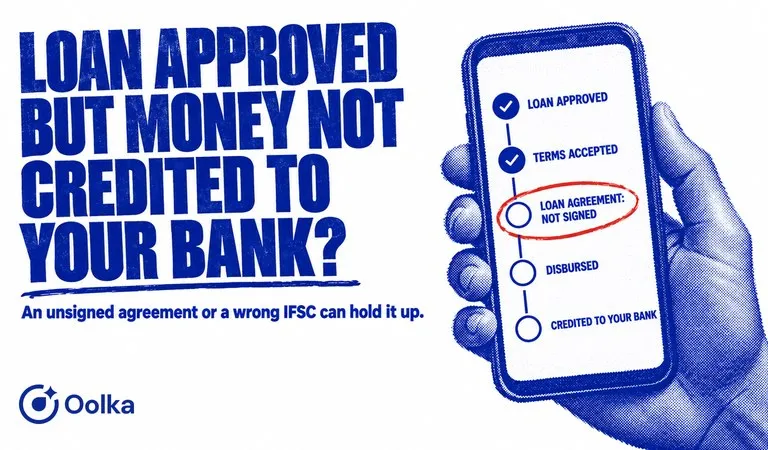
A loan passes through several stages: approval, acceptance of terms, completion of formalities, disbursement, and transfer to your bank account. A delay at any stage can leave you without the approved funds.
| Possible reason | What to check |
| Pending document verification | Check the application status for outstanding documents or verification steps. |
| Loan agreement not completed | Review the lender’s checklist and sign any pending agreements. |
| KYC or e-mandate incomplete | Confirm that identity verification and mandate registration are complete. |
| Bank details need correction | Verify the account number, account holder’s name, and IFSC code submitted with the application. |
| Disbursement is still processing | Ask the lender for the expected release date and current status. |
| Transfer initiated but not received | Request the transaction reference number and confirm the transfer status with your bank. |
The solution depends on the cause. Submit missing documents if verification is incomplete. If the lender has initiated payment, request the transaction reference and expected credit date. If disbursement has not started, ask which requirement remains outstanding and when it will be completed. Get a specific status and timeline rather than relying on a vague assurance that the money will arrive soon.
What Should You Do When the Lender Has Not Started Disbursement?
If you are waiting for bank to initiate disbursement, confirm whether the lender has completed all formalities or whether your application is awaiting internal approval. A sanction letter confirms the offered loan terms, but the funds are not necessarily ready for transfer.
Check the lender’s official app or website. If the status remains pending, contact the loan officer or customer support team and ask whether the loan is fully processed, whether any condition remains outstanding, and when disbursement is scheduled. For example, if Axis Bank has sanctioned your loan but payment remains pending, ask the officer to identify the exact outstanding step.
Before escalating, check:
- Review the sanction letter for conditions that must be met before disbursement.
- Confirm that the loan agreement has been accepted and signed.
- Check whether verification or mandate registration is incomplete.
- Request a specific disbursement date and retain the lender’s response.
Also Read: Home Loan Sanction Letter: Meaning and Importance
What If the Loan Amount Was Disbursed but Not Credited?
If your lender says the transfer is complete, but the funds are missing from your account, ask for the transaction reference number. The loan amount disbursed but not credited issue could stem from a processing delay or incorrect bank details. A status marked “disbursed” does not necessarily mean the funds are available in your account.
Check your bank statement, confirm the destination account, and ask the lender for the transfer date, payment method, transaction reference, and current status. If the transfer failed, the lender needs to explain whether it will retry the payment or requires corrected details. If it was successful, contact your bank with the reference number and ask it to trace the payment.
Keep your loan application number, expected transfer amount, relevant messages, and transaction reference ready. If neither institution resolves the issue, raise a formal complaint and retain the complaint number. Do not pay an unexpected fee to release the funds without verifying the request through the lender’s official channel.
Could Documentation or E-Mandate Issues Delay Disbursement?
An incomplete application can hold up a loan even after sanction. The lender might still require identity verification, address confirmation, a signed agreement, income documents, or a successfully registered electronic repayment mandate. A personal loan sanctioned but not disbursed situation therefore requires checking whether the approval is conditional.
Review the sanction letter and loan agreement for outstanding requirements. Complete pending steps through the lender’s verified app, website, or branch. If e-mandate registration fails, check whether the required authentication was completed and whether your bank account supports the registration process. If the lender requests additional documents, ask why they are needed and how to submit them securely.
The Reserve Bank of India’s KYC Directions outline customer identification requirements for regulated entities. If your KYC status remains pending despite successful verification, ask the lender to review the application and confirm what is outstanding.
You already have a loan delay to resolve. Don’t add the burden of managing a reporting dispute on your own. Oolka handles the dispute filing, lender communication and follow-ups for you. That way, you can focus on getting your loan disbursement issue resolved while Oolka takes care of the reporting dispute.
How Do Incorrect Bank Details Affect Loan Disbursement?
An incorrect account number, IFSC code, inactive account, or mismatch in beneficiary details can delay or prevent a transfer. Application acceptance does not guarantee that payment details have passed every validation check.
Compare the information in your loan application with your bank statement or official banking app. If the lender uses an account-validation process, ask whether it succeeded. If you find an error, notify the lender through its official support channel and confirm whether the payment instruction has already been sent. Follow the lender’s instructions before changing details or requesting another transfer.
Keep written confirmation of any changes. Never share your banking password, PIN, or OTP with a loan agent, and do not pay an intermediary to correct the transfer. The priority is to establish the payment status and prevent duplicate transactions.
Does Your Eligibility Affect the Final Loan Release?
Personal loan eligibility depends on factors such as income, employment, existing EMIs, repayment history, and the lender’s own criteria. Meeting these requirements does not mean the funds are ready for transfer. Some approvals remain conditional on document verification, acceptance of final terms, or other outstanding checks.
Ask whether the sanction remains valid and whether any condition is pending. If the lender changes the sanctioned amount or withdraws the offer, request the reason and applicable terms in writing.
Avoid submitting repeated applications to different lenders simply because one disbursement is delayed. Multiple applications create additional enquiries and complicate the process of tracking each application. First, request a written explanation from the existing lender and establish the next step. If the delay remains unresolved, use the lender’s formal grievance process.
What Should You Do If the Delay Continues?
Start with the lender’s customer service team or loan officer. Explain that the loan has been approved but the money has not arrived, and request the precise reason, current status, and expected disbursement date. If the initial response does not resolve the issue, raise a formal complaint through the lender’s grievance redressal process.
Include your application number, sanction date, promised timeline, relevant messages, and any transaction reference. Retain copies of all responses. For loans from SBI, ICICI Bank, HDFC Bank, or Axis Bank, use the official bank website or app to locate the complaint channel. For NBFCs such as Tata Capital or Bajaj Finance, contact the lender through its verified support channels.
If the lender does not resolve the complaint within the applicable period, or its response is unsatisfactory, check whether the matter qualifies for escalation through the RBI’s Complaint Management System. Before escalating the issue, confirm whether the lender has delayed the disbursement, the transfer has failed, or you still need to complete a loan requirement.
If an error in your credit report is holding things up, Oolka takes the follow-up off your hands. It files the dispute, writes the lender email and follows through on the correction request. Checking your report and finding what’s wrong is free; you pay only when you want Oolka to act.
Key Takeaways
Loan approval and loan disbursement are separate stages. If the money has not arrived, verify the application status, check for pending documentation, confirm your bank details, and ask whether the lender has initiated the transfer.
If payment was sent, obtain the transaction reference and ask your bank to trace it. If the lender has not released the funds, request a written explanation and a definite timeline. Escalate unresolved complaints through the lender’s grievance process and, where eligible, the RBI.
FAQs
1. How long does it take to receive money after loan approval?
The timeline depends on the lender, loan agreement, and completion of verification and disbursement formalities. Check the sanction terms and ask for the scheduled transfer date if the expected timeline has passed.
2. What is the difference between loan approval and loan disbursal?
Loan approval means the lender has agreed to offer the loan, subject to its terms and any outstanding conditions. Disbursal is the release of the approved funds to the designated account or recipient.
3. What should I do if my loan is approved but not credited to my bank account?
Check the loan status, confirm your bank details, and ask the lender whether payment has been initiated. If it has, request the transaction reference and ask your bank to trace the transfer.
4. Can a wrong bank account number or IFSC code delay loan disbursal?
Yes. Incorrect account details can cause a failed or delayed transfer. Contact the lender immediately, confirm whether payment was sent, and follow its instructions to correct the details or trace the transaction.
5. Does incomplete KYC or e-mandate registration delay loan disbursement?
Yes. Pending identity verification, incomplete documentation, or unsuccessful e-mandate registration can hold up disbursement. Complete the outstanding steps through the lender’s official channels and ask them to confirm when the application is ready for release.