
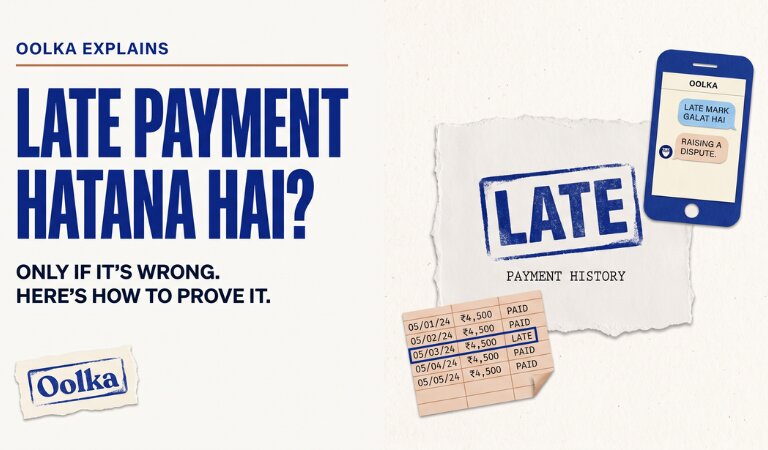
An accurate late payment record cannot be removed from your credit report. An incorrect late payment record can be corrected by raising a dispute with the lender or the credit bureau after verification.
Sonali, 28, from Chennai, applied for a home loan after maintaining timely repayments for more than two years. During verification, the lender pointed out a late payment entry from an old personal loan. Sonali believed clearing the loan had removed the delay from her report. It hadn’t. The payment was genuine, so it continued to appear even though the loan was fully repaid.
This distinction creates confusion for thousands of borrowers. Paying off a loan does not erase a genuine delay, while an incorrect late payment should not remain on the report at all. Understanding the difference prevents unnecessary disputes and helps you focus on the right solution.
Can You Remove Late Payments From A Credit Report?
The answer depends on whether the late payment is accurate or incorrect. Genuine late payments remain on the report and disappear after the prescribed reporting period. Incorrect late payments should be disputed with the lender or credit bureau for correction.
If you’re trying to remove late payments from your credit report, the first step is to determine whether the reported delay is accurate or incorrect.
| Accurate Late Payment | Incorrect Late Payment |
| Reported correctly | Reported because of an error |
| Cannot be removed simply because the payment was later made | Can be disputed with the lender or credit bureau |
| Continues to influence lending decisions while it remains on the report | Stops affecting lending decisions once corrected |
Before raising a dispute, compare your bank statements, repayment receipts, loan statement, and payment confirmation with the reported entry. Filing a dispute against a genuine delay only prolongs the process because the lender verifies its own repayment records before approving any correction.
What Happens If The Late Payment Is Accurate?
An accurate late payment record stays on the report even after the outstanding amount is paid. Clearing the loan closes the financial obligation but does not rewrite the repayment history.
Borrowers asking “how to remove missed payments from a credit report” are often disappointed to learn that genuine late payments cannot be deleted just because the outstanding amount has been paid.
The practical approach is different:
- Pay every future EMI before the due date.
- Avoid additional delayed payments.
- Reduce unnecessary credit applications.
- Maintain low credit utilisation on active credit cards.
A single genuine delay does not permanently prevent loan approvals. Lenders review the complete repayment history, income, existing obligations, and recent repayment behaviour before making a lending decision.
Instead of looking for ways to erase a correct record, focus on building a stronger repayment history over the following months. Consistent on-time repayments gradually carry more weight than one older delay.
What Should You Do If The Late Payment Is Incorrect?
An incorrect late payment should be disputed as soon as you identify it. Waiting longer allows the incorrect information to continue affecting lending decisions until the lender verifies and corrects the record.
If you’re wondering how to remove late payments from your credit report, this is the only situation where a correction is possible because the reported information is inaccurate.
Start by collecting documents that prove the payment was made on time, such as:
- Bank account statement showing the debit.
- UPI or NEFT payment confirmation.
- Loan account statement.
- Email or SMS acknowledgement from the lender.
- Loan closure or repayment confirmation, where applicable.
After gathering the documents, submit the dispute through the relevant credit bureau or directly with the lender responsible for reporting the account. Bureaus such as Experian India do not independently change repayment information. They forward the dispute to the lender, which verifies the repayment records before approving or rejecting the correction.
This is why supporting documents matter far more than simply stating that the entry is incorrect.
Also Read: How to Consolidate Debt: Benefits, Risks and Smart Repayment Strategies
How Do You Dispute An Incorrect Late Payment Record?
A dispute requests the lender to verify whether the reported repayment information is correct. If the lender confirms an error, the corrected information is shared with the credit bureau during the update process.
The dispute process is straightforward:
- Download your latest credit report.
- Identify the account containing the incorrect late payment.
- Collect repayment evidence.
- Submit the dispute through the bureau or lender.
- Track the status until verification is complete.
Disputes supported by clear repayment records move faster than requests without documentary evidence. Before submitting the request, double-check dates, transaction references, and loan account numbers so the lender can match your documents with its internal records.
Check your report on Oolka. Oolka prepares every step of the correction process, from dispute filing to lender follow-ups, so you don’t have to.
When Do Late Payments Fall Off A Credit Report?
A genuine late payment does not remain on your report forever. If the reported delay is accurate, it stays as part of your repayment history for the applicable reporting period and then disappears automatically. It does not need a dispute because the information itself is correct.
If you’re wondering “when do late payments fall off credit report”, the answer is: paying the overdue amount does not automatically remove the late payment from your credit history. The account can show that the dues have been cleared while still retaining the historical repayment information. That history can continue to be considered when a lender assesses a future credit application.
The difference is important:
- Genuine late payment: Can remain part of the reported repayment history after the overdue amount is cleared.
- Incorrect late payment: Can be disputed and corrected after the lender verifies the records.
- Loan fully repaid: The loan closes, but an accurate historical late payment does not automatically disappear when the loan is closed.
RBI’s Credit Information Reporting framework requires regulated entities to report credit information to Credit Information Companies, with the framework covering the reporting and dissemination of borrowers’ credit information. This is why clearing an overdue payment and changing what is reported about the account are two separate things.
How One Incorrect Late Payment Delayed A ₹16 Lakh Home Loan
Ashish, 38, from Ahmedabad, applied for a ₹16 lakh home loan balance transfer after repaying every EMI on time for more than a year. During verification, the lender found a late payment entry on an older personal loan that Ashish’s bank statements did not support.
Instead of asking him to contact different institutions himself, Oolka:
- Prepared the dispute with the repayment evidence.
- Drafted the lender clarification email with supporting documents.
- Followed up with the lender until the verification process was completed.
The application moved forward using the corrected repayment history instead of the inaccurate late payment entry. The outcome depended on the lender’s credit policy, but the incorrect record no longer delayed the assessment.
How Does Paying Off Unpaid Debt Affect Your Credit Report?
Paying an overdue amount is always better than leaving it unpaid because it stops the outstanding balance from continuing to grow. It also shows that the loan has been brought back into good standing, even though the repayment delay remains part of the repayment history.
Borrowers searching for information about paying off delayed unpaid debt often expect the late payment entry to disappear immediately. That does not happen when the delay was reported correctly.
Instead, paying the overdue amount helps in other ways:
- Stops additional penal charges from accumulating.
- Prevents the overdue balance from increasing further.
- Reduces the risk of continued recovery action.
- Starts rebuilding repayment history through future on-time payments.
A single older delay carries less weight over time when it is followed by consistent repayments. The repayment record becomes stronger because recent payment behaviour begins to outweigh older events.
How Can You Rebuild Your Score After A Late Payment?
A late payment does not permanently prevent you from qualifying for future credit. The fastest improvement comes from consistently making every payment on or before the due date after the delay has been resolved.
If the main question in your mind is “how to increase credit score”, focus on actions that lenders recognise as positive repayment behaviour.
Avoid missing fresh EMIs, keep credit card utilisation under control, and avoid submitting multiple loan applications within a short period. A stronger repayment record built over the following months has a much bigger impact than searching for ways to remove a genuine late payment.
Oolka turns a complicated correction process into a managed one by preparing disputes, handling lender communication, and staying with the case until a response is received.
The Bottom Line: Removing Late Payment Records Depends On Whether They’re Correct
A genuine late payment cannot be removed simply because the overdue amount has been paid. It remains on the report for the applicable reporting period and then drops off automatically. An incorrect late payment follows a different process because the information itself is wrong.
If you believe a lender has reported an incorrect delay, act quickly. Gather repayment proof, raise a dispute, and respond promptly if additional documents are requested during verification. Waiting only extends the time the incorrect information remains on your report.
Also Read: How to Get Out of Debt Faster
FAQs
1. Can late payment records be removed from a credit report?
Accurate late payment records cannot be removed simply because the outstanding amount has been paid. Incorrect late payment records can be corrected after the lender verifies the dispute and updates the reported information.
2. How long do late payments stay on a credit report?
Paying the overdue amount does not erase an accurate late-payment record from your credit history. The account can show that the dues were cleared while still retaining the historical repayment information that lenders consider when assessing future credit applications.
3. What is the fastest way to improve my credit score after a late payment?
Continue making every EMI and credit card payment on time without further delays. Consistent repayment over the following months carries more weight than trying to remove a genuine late payment.
4. Can I dispute a late payment if I paid on time?
Yes. If the reported delay is incorrect, submit repayment proof to the lender or credit bureau through the dispute process. The lender verifies the records before approving any correction.
5. Does paying off a loan remove late payment history?
No. Closing or repaying the loan does not erase a genuine late payment from the repayment history. The repayment history and loan status are reported separately.
6. Will one late payment permanently damage my credit score?
No. One late payment does not permanently determine future lending decisions. Continued on-time repayments help strengthen your repayment record over time.
7. How can I check if a late payment is affecting my credit score?
Download your latest credit report and review the repayment history for each loan account. Compare the reported payment status with your own repayment records to identify any incorrect entries.
8. How do I remove incorrect late payment records from my credit report online?
Submit a dispute through the relevant credit bureau or directly with the lender, along with documents supporting your claim. The correction is made only after the lender verifies that the reported information is incorrect.