
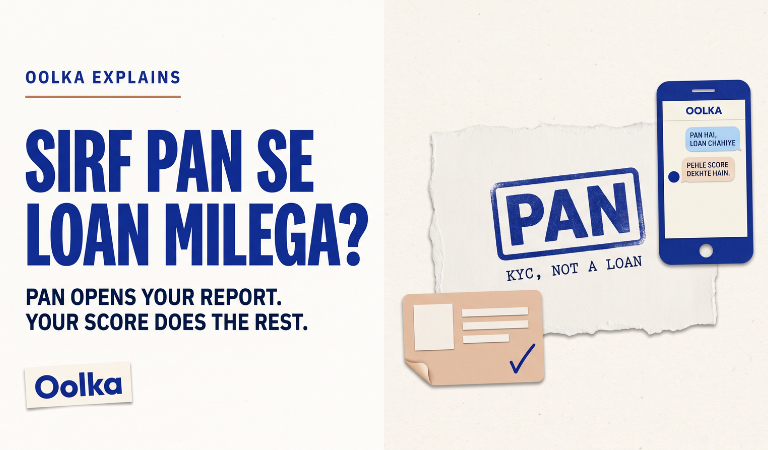
A PAN card alone does not get you a loan. It is an important identity and financial document, but lenders also need information about your income, repayment capacity, existing debt and credit history before approving a loan.
An individual needed Rs. 3 lakh for a family expense and searched online for a PAN card loan, expecting the PAN number to be enough to get the money. When the borrower applied, the lender also asked for income details, bank statements and information about the existing credit obligations.
Entering your PAN on a lender’s application helps verify your identity and retrieve relevant financial information. It does not guarantee approval or mean the lender will sanction money based on the PAN alone because it is only one part of the application. The lender still decides whether you qualify and how much you can borrow.
Can You Actually Get a Loan Using Only Your PAN Card?
No, you cannot get a loan using only your PAN card. The card does not establish your income or repayment capacity. A lender needs enough information to decide whether the requested loan is affordable and whether the application meets its credit policy.
A PAN card loan is therefore a loan where PAN is one of the required identifiers, not a special loan that requires nothing else.
A salaried applicant could be asked for salary slips and bank statements. A self-employed applicant could need income-tax records, business documents or banking records. The exact requirements depend on the lender, loan type and applicant.
RBI’s KYC framework requires regulated entities to obtain and verify PAN or Form 60 in applicable transactions. PAN is important for identification, but it is only one part of the lending process.
What Does a PAN Help a Lender Check?
Your PAN helps a lender identify you consistently across financial and tax-related records. It is also used during KYC, credit assessment and reporting processes.
When you submit an instant loan on PAN card application, the lender can still ask for information that proves income, employment, bank activity and repayment capacity. PAN does not replace these checks.
Lenders may ask for PAN and other identity details alongside income, employment and financial information. Applicants may also need KYC documents such as PAN and Aadhaar, along with supporting documents depending on the lender’s requirements.
The practical takeaway is simple: PAN helps identify the borrower; it does not prove that the borrower can repay the loan.
How Much Can You Borrow With a PAN Card?
There is no fixed maximum loan amount linked to a PAN card. The amount depends on the lender, loan product, income, existing obligations, repayment history, employment or business income and other underwriting factors.
A person earning Rs. 60,000 a month with limited existing EMIs is assessed differently from someone earning Rs. 1.2 lakh but already paying Rs. 50,000 towards other loans.
For a PAN card loan, apply online and focus on the lender’s eligibility and documentation rather than the amount advertised in a banner. A Rs. 1 lakh personal loan, Rs. 5 lakh emergency loan and Rs. 20 lakh business loan involve different assessments.
Banks and NBFCs set their own lending criteria. PAN is common documentation, but the sanctioned amount depends on the complete application.
What Documents Do You Need Besides PAN?
PAN is usually accompanied by KYC and financial documents. The exact list changes by lender and loan type, so applicants should check the current document checklist before submitting an application.
| Loan requirement | Documents or information commonly requested |
| Identity and KYC | PAN, Aadhaar or another officially valid document |
| Income | Salary slips, Form 16, income-tax records or business income documents |
| Banking | Recent bank statements or account information |
| Employment or business | Employer details, business records or relevant registration documents |
| Credit assessment | Existing loan details, repayment information and credit-report data |
A lender’s documentation checklist includes PAN or other identity proof, bank statements, and income documents. Requirements vary between salaried and self-employed applicants.
Does Your Credit History Matter More Than Your PAN?
Yes. PAN identifies you, but your credit history gives a lender information about how you have handled previous borrowing.
A lender reviewing a loan application looks beyond a single document. It considers previous repayment behaviour, outstanding debt, recent enquiries and information reported by credit bureaus such as CRIF High Mark, Equifax and Experian India.
Standard score bands provide a useful reference:
- 300 to 549: Low
- 550 to 649: Moderate
- 650 to 749: Good
- 750 and above: Very good
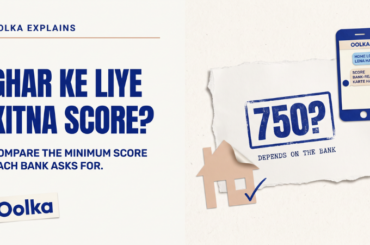
For context, 650+ is a useful target for some credit-card applications, 700+ is a stronger target for personal loans, and 750+ is a practical target for home loans. Each lender still applies its own criteria.
How Can You Check Your Credit Information Before Applying?
Before applying for a loan, review your credit report for incorrect overdue entries, duplicate accounts, wrong balances, closed accounts still shown as active or payments marked late when they were made on time.
A credit score check by PAN card is useful because PAN helps connect the check to the correct credit information. But the number alone is not enough. Read the account-level details behind the score.
If you find an error, do not submit multiple loan applications and hope the issue disappears. The underlying information needs to be challenged with the relevant lender and credit bureau.
Checking your report and finding what is wrong on Oolka is free. You pay only when you want Oolka to act on the issue.
What Should You Do If You Find an Error?
If an incorrect entry is affecting your loan application, gather the relevant payment proof, account details and lender correspondence before raising the dispute.
The goal is not to create a new credit record. It is to challenge information that has been reported incorrectly.
If a lender has reported a paid account as overdue, for example, the borrower needs to dispute that specific entry and provide evidence of payment.
Oolka takes the work off your hands. It raises the dispute, prepares the objection letter and follows up with the lender until a response is received.
Find and Dispute Credit Report Errors with Oolka →
How One Wrong Entry Delayed a ₹6 Lakh Loan
A borrower applied for a Rs. 6 lakh personal loan after a car repair business needed working capital. The PAN and income documents were in order, but the credit report showed an overdue amount on an old loan that had already been repaid.
The lender questioned the entry before moving ahead with the application. The borrower had the repayment receipt but did not know how to structure the dispute or whom to contact.
If an entry like this is wrong, Oolka can take it on:
- It files a dispute against the incorrect overdue entry.
- It drafts the lender email.
- It follows up with the lender on the correction request.
- It keeps the issue moving until the lender responds.
The lesson is straightforward: a PAN helps identify you, but an incorrect credit entry can still affect a loan application.
How Can You Improve Your Credit Score Before Applying?
Improving a score starts with fixing the factors behind it rather than looking for a shortcut.
To improve credit score, pay existing EMIs and card dues on time, keep outstanding revolving balances under control, avoid unnecessary applications and check the report for incorrect information.
If your score is 640 and you plan to apply for a personal loan after six months, use that period to build a clean repayment record and resolve reporting errors. Do not take a new loan simply to create activity in the report.
A higher score does not guarantee approval. It gives the lender a stronger repayment history to assess alongside income, existing obligations and the requested loan amount.
What Should You Check Before Taking a PAN-Based Loan?
A PAN-based loan search should never end with the first approval message you receive. Before accepting an offer, check the lender and the full cost of borrowing.
Look at the interest rate, processing fee, tenure, EMI, late-payment charges, foreclosure or prepayment terms and total amount payable.
Also check whether the lender is a bank or regulated NBFC. Do not share your PAN, Aadhaar, bank credentials or OTP with an unknown person claiming to arrange an instant loan.
If your credit report contains an error, fix it before applying to multiple lenders. With Oolka, the dispute, lender communication and follow-up are handled for you, so you do not have to spend your time chasing the bank.
Also Read: How to Get Personal Loan of Rs 1 Lakh instantly
The Bottom Line: What Can Your PAN Actually Get You?
Your PAN card helps establish your identity for a loan application, but it does not guarantee approval or determine the loan amount. Banks and NBFCs still assess income, existing EMIs, repayment history, credit score and other documents.
A genuine instant loan with PAN card is therefore still a full lending decision, even when the application itself takes only a few minutes.
If you need credit, compare the lender’s terms, check your report before applying and address incorrect information first. Your PAN starts the identification process. It does not replace the lender’s assessment.
FAQs
1. Can I get a loan just by using my PAN card?
No. PAN is an identification document, not proof of income or repayment capacity. Lenders require additional KYC and financial information before approving a loan.
2. Can I get a loan on PAN card and Aadhaar card without income proof?
PAN and Aadhaar establish identity, but they do not prove repayment capacity. The lender requires salary, bank or income documents depending on the loan and applicant.
3. What is the maximum loan amount I can get with just a PAN card?
There is no fixed loan amount linked to PAN. The sanctioned amount depends on income, existing obligations, repayment history, loan type and the lender’s eligibility criteria.
4. What documents are required along with PAN card for a loan?
Lenders can ask for Aadhaar or another KYC document, bank statements, salary slips, Form 16, income-tax records and other income or business documents.
5. What credit score is needed to get a loan on PAN card?
There is no single score requirement for every lender. A stronger score supports loan eligibility, but lenders also assess income, existing debt, repayment history and other application details.
6. Can self-employed individuals get a loan using only a PAN card?
Self-employed applicants can apply for loans, but PAN alone is not enough. Lenders can request income-tax returns, bank statements, business records and other documents to assess repayment capacity.
7. Is it safe to take a loan using only PAN card details?
PAN alone should not be treated as enough information for a legitimate loan approval. Apply through a verified lender, check the terms and never share OTPs, passwords or banking credentials with unknown parties.