
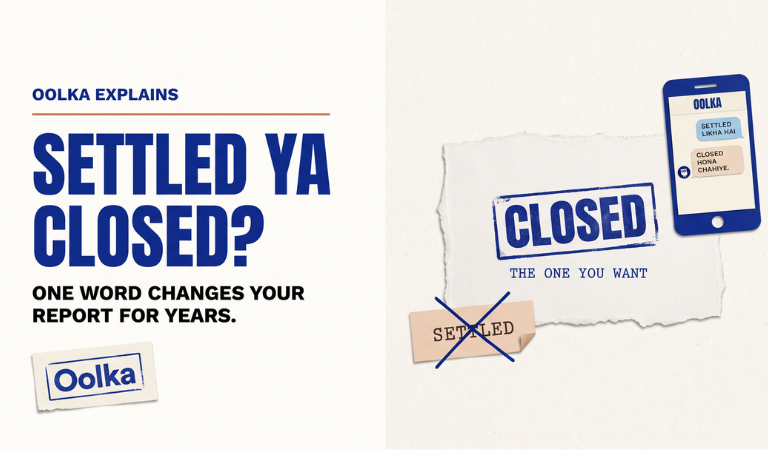
A loan closure means you have repaid the entire loan, including principal, interest, and applicable charges. A settlement means the lender has accepted less than the total amount due, and both outcomes are treated differently when you apply for credit in the future.
Nitin, 28, from Noida, borrowed ₹7 lakh to manage a business cash-flow shortage. Two years later, he struggled to repay the remaining balance. The bank offered two options: repay the full dues and close the loan, or settle the account for a lower amount. The settlement looked cheaper, but it also affected his next home loan application.
This is where many borrowers get confused. Both options end the loan account, but they do not create the same record with the lender or credit bureaus such as Experian India. Understanding that difference before making a decision can save years of repayment trouble and rejected loan applications.
What Is A Loan Closure?
A loan closure means the borrower has repaid every rupee owed under the loan agreement. The lender receives the complete outstanding amount, updates the account as closed, and issues a loan closure confirmation after all dues have been cleared.
The payment includes:
- Outstanding principal.
- Accrued interest.
- Applicable charges or fees.
- Any pending penalties before closure.
Once the payment is completed, the lender closes the account in its records. Borrowers should also collect the loan closure letter, no-dues certificate, and confirmation that all security documents, if applicable, have been released.
For example, if someone borrows ₹5 lakh from SBI and repays every EMI along with the final outstanding amount, the loan ends as a closed account instead of a settled account. That distinction becomes important when another bank evaluates the repayment history during a future loan application.
What Does Full Settlement Mean?
A full settlement is an agreement where the lender accepts less than the total amount outstanding and treats the remaining balance as waived under mutually accepted settlement terms. This option usually appears after prolonged repayment difficulties instead of during normal loan repayment.
For example, imagine a borrower still owes ₹3.5 lakh after missing several EMIs. Instead of recovering the full amount, the lender agrees to accept ₹2.4 lakh as a final settlement. The remaining balance is not collected, but the account is recorded as settled instead of closed.
Settlement reduces the immediate repayment burden, but it also tells future lenders that the original loan agreement was not completed as agreed.
Banks and NBFCs reserve settlement discussions for borrowers facing genuine repayment stress. Choosing settlement simply because it is cheaper can create longer-lasting borrowing challenges than paying the remaining outstanding amount in full.
Also Read: How Loan Settlement Affects Your Credit Score
Loan Closure Vs Settlement: What’s The Difference?
Although both options end the loan account, the repayment outcome recorded by the lender is completely different. That single difference influences how future lenders evaluate your previous borrowing behaviour.
| Factor | Loan Closure | Loan Settlement |
| Amount Paid | Entire outstanding amount | Agreed reduced amount |
| Loan Status | Closed | Settled |
| Outstanding Dues | Nil | Partially waived by lender |
| Future Loan Assessment | Stronger repayment record | Additional lender scrutiny |
| Purpose | Normal completion | Financial hardship resolution |
The biggest difference is not the payment itself. It is the message each outcome sends.
A closed loan shows that every repayment obligation was completed. A settled loan shows that the lender accepted a reduced payment because the original agreement could not be completed. That distinction becomes important when applying for high-value products such as home loans or business loans.
How Does The Loan Settlement Process Work?
The loan settlement process starts when a borrower is unable to continue repayments and approaches the lender for a negotiated resolution. The lender reviews the repayment history, outstanding dues, income situation, and recovery stage before deciding whether to offer a settlement.
The process normally follows these steps:
- The borrower informs the lender about the repayment difficulty.
- The lender evaluates the account and supporting documents.
- A settlement amount is negotiated.
- Both parties agree to the settlement terms in writing.
- The borrower pays the agreed amount within the specified timeline.
- The lender issues a settlement confirmation after receiving the payment.
Settlement is a last-resort option, not an alternative to regular repayment. If clearing the entire outstanding amount is still possible through savings or financial assistance, that option almost always leaves a stronger repayment record than accepting a settlement.
Before accepting any settlement offer, understand exactly how the lender will report the account after the payment is completed.
Check your report on Oolka. Checking your report and finding issues is free. If action is needed, Oolka drafts dispute requests, prepares lender objection emails, and follows through until the lender responds.
How One Settlement Delayed A ₹22 Lakh Home Loan
Sandeep, 41, from Lucknow, settled a personal loan four years earlier after his business faced heavy losses during a slowdown. He believed the matter had ended because the lender issued a settlement confirmation.
When he later applied for a ₹22 lakh home loan, the bank asked for additional clarification about the settled account before processing the application. Sandeep was unsure which records the lender had reviewed or how to respond.
Oolka stepped in and:
- Drafted the lender clarification email with the required supporting documents.
- Filed the dispute for the account information that required verification.
- Followed up on every response until the verification process was completed.
- Kept the entire correction process moving without requiring Sandeep to chase multiple stakeholders.
The application then moved forward with complete supporting records instead of unanswered questions.
The issue was not the age of the settlement. It was making sure the lender had the correct information before taking the next lending decision.
Should You Choose Settlement Or Pay The Closing Amount?
The closing amount is the total money required to repay every outstanding loan obligation and complete the account without leaving unpaid dues. Paying this amount ends the loan under the original agreement instead of through a negotiated compromise.
If both options are financially possible, paying the closing amount leaves a stronger repayment record than choosing settlement.
Think about these questions before deciding:
- Can you arrange the remaining amount without creating another debt?
- Will a short-term financial adjustment prevent years of borrowing difficulty?
- Are you settling because repayment is impossible or because it appears cheaper?
- Have you confirmed the exact amount required for complete closure?
Borrowers sometimes focus only on today’s payment without considering the effect on future loan applications. Saving ₹1 lakh today through settlement may become expensive later if a larger home loan or business loan faces additional scrutiny because the previous loan was not closed in full.
Can You Get A Loan After Settlement?
Yes, lenders still approve loans after a previous settlement, but the application receives closer scrutiny because the earlier loan was not repaid in full under the original agreement. The final decision depends on current income, repayment behaviour after the settlement, existing debt, and the lender’s internal credit policy.
A borrower who settled one loan several years ago and has since maintained regular repayments stands in a stronger position than someone with recent repayment delays.
Before submitting a fresh application:
- Review your repayment history carefully.
- Clear outstanding dues on existing credit accounts.
- Avoid multiple loan applications within a short period.
- Keep income and employment documents ready if additional verification is requested.
If you want to view credit score, start by checking the latest report before applying. Reviewing it early helps identify repayment entries or account information that may require clarification before a lender evaluates the application.
How Can You Improve Your Credit After A Settlement?
A settled loan does not remain the defining factor forever. Consistent repayment behaviour over time carries more weight than one historical event, provided there are no fresh repayment issues.
Many people ask “how to fix credit score”, and the answer is: focus on actions that strengthen future repayment history instead of searching for shortcuts.
Practical steps include:
- Pay every EMI before the due date.
- Clear outstanding credit card dues on time.
- Avoid unnecessary loan applications.
- Keep credit utilisation under control.
- Check your report regularly for incorrect account information.
Check your report on Oolka. From filing disputes and writing emails to following up, Oolka handles each step with precision. Credit report disputes should be resolved within 30 days. If the delay goes beyond that, RBI requires the responsible credit institution or credit bureau to pay ₹100 per day as compensation.
The Bottom Line: Loan Settlement Vs Loan Closure
Loan closure and loan settlement both end a loan account, but they leave different repayment records. Paying the full outstanding amount closes the loan under the original agreement, while settlement records that the lender accepted less than the amount due.
If repayment in full is still possible, loan closure remains the stronger choice. If settlement becomes unavoidable, understand its long-term impact before accepting the offer and review your credit report before applying for another loan.
Also Read: How to Draft a Loan Closure Letter for a Personal Loan with a Sample Format
FAQs
1. Is loan settlement the same as loan closure?
No. Loan closure means the entire outstanding amount has been repaid, while settlement means the lender accepted less than the amount originally due.
2. Which is better: loan settlement or loan closure?
Loan closure is the better option because the original loan agreement has been completed in full. Settlement should be considered only when full repayment is no longer possible.
3. Can I get a personal loan after loan settlement?
Yes. Lenders review the application based on repayment history, income, existing obligations, and their own lending policy before making a decision.
4. Does a settled loan permanently affect my credit score?
No. Its impact reduces over time if future repayments remain consistent and no new repayment issues arise.
5. Can I convert a settled loan into a closed loan?
That depends on the lender’s policy and whether it allows repayment of the remaining waived amount. You must discuss the option directly with the lender.
6. How long does a settled loan remain on my credit report?
The repayment history remains part of the report for the bureau’s prescribed reporting period. Lenders continue to consider recent repayment behaviour along with historical records.
7. Should I choose loan settlement if I can’t pay my EMIs?
Settlement is a last-resort solution after discussing repayment options with the lender. Explore restructuring or other alternatives before accepting a settlement.
8. Will banks reject my loan application if I have a settled loan?
Not automatically. The lender reviews your current repayment history, income, existing debt, and overall application before taking a lending decision.