
“My CIBIL is 780, but my bank says my Equifax is 720. Who is right? And why is the bank even looking at this second score?”
Arjun, 32, a marketing manager from Lucknow, was applying for a home loan. He had meticulously checked his credit score on a popular app for months. He was confident. But when the loan officer sat him down, the numbers didn’t match.
“Your Equifax report shows an old ₹5,000 dispute from five years ago,” the officer said. “It’s dragging your score down in their system.”
Arjun felt blindsided. He had focused so much on one “famous” score that he completely missed the other one that actually mattered to his bank.
Here’s what nobody told you: In India, you don’t have just one credit reputation. You have four. Equifax is the global giant that many Indian banks trust just as much—if not more—than CIBIL. If you aren’t tracking your Equifax score, you’re only seeing half of what the bank sees.
What is an Equifax Credit Score?
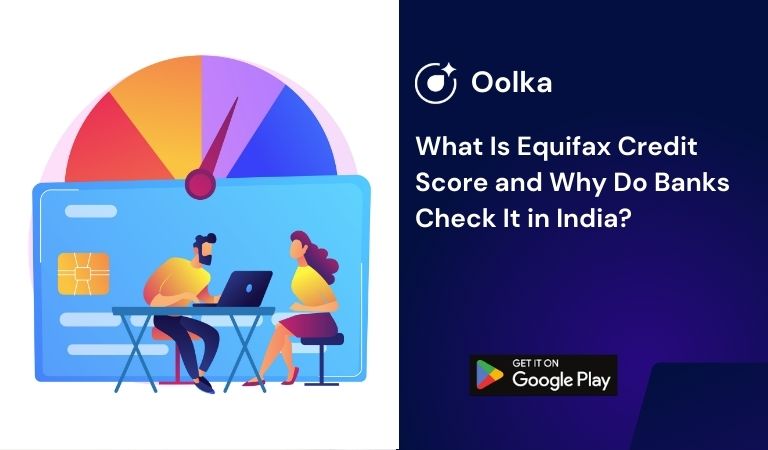
Equifax is one of the four RBI-licensed credit bureaus in India. While CIBIL is the oldest, Equifax is a global powerhouse that brought advanced data analytics to the Indian market in 2010.
An Equifax score is a 3-digit number ranging from 300 to 900. It acts as a “financial summary” of how you handle borrowed money.
The Equifax Score Ranges:
| Score Range | What It Means | Loan Reality |
| 800 – 900 | Excellent | You are a “Low-Risk” hero. Best interest rates, instant approvals. |
| 740 – 799 | Very Good | High chance of approval for premium credit cards. |
| 670 – 739 | Good | Acceptable to most lenders. Standard interest rates. |
| 580 – 669 | Fair | “Subprime” zone. Expect higher interest and more paperwork. |
| 300 – 579 | Poor | High risk. Most formal banks will likely reject your application. |
Why do Indian Banks check Equifax?
You might wonder, “If they have CIBIL, why do they need Equifax?”
The answer is Depth. 1. Analytical Depth: Equifax is known for using “Trended Data.” While some bureaus only look at your balance today, Equifax’s algorithms look at how your balance has changed over the last 7 years. This helps banks see if you are gradually paying off debt or slowly drowning in it.
2. Microfinance & Retail Focus: Equifax has a specialized bureau for Microfinance Institutions (MFIs). If you’ve taken small “village” loans or “Buy Now Pay Later” (BNPL) credit, it often shows up more clearly on an Equifax report.
3. The “Second Opinion”: Large banks like SBI, Bank of Baroda, and Kotak Mahindra are actually partners with Equifax India. They use it as a “double-check” to ensure that one bureau hasn’t missed a default or a new loan.
Real Story: The 7-Year “Ghost” Debt
Meera, 29, Freelance Designer (Mysore)
Starting point (Aug 2025):
- Score: 640 (Equifax)
- The Problem: Meera had never missed a payment in 3 years. She couldn’t understand why her score was “Stuck” in the Fair range.
What she did:
- Month 1: She checked her Equifax report on Oolka. Unlike her other reports, Equifax’s longer history showed an “Unpaid” utility bill from her college hostel days in 2019.
- Action: It was a ₹1,500 mistake. Meera contacted the provider, paid the dues, and used Oolka to track the update.
Result:
- Month 3: Once that 6-year-old “Ghost” was cleared, her score jumped to 755. She finally got her car loan approved at a 9.5% interest rate instead of the 13% she was offered earlier.
Lesson: Equifax remembers longer than you think. If your score is low and you don’t know why, your past might be hiding in an Equifax report.
How is the Equifax Score Calculated?
Equifax doesn’t just look at “Yes/No” for payments. Their math is specific:
- Payment History (35%): This is the biggest slice. Even a 3-day delay in a ₹500 EMI is recorded here.
- Amounts Owed (30%): Also known as Credit Utilization. If you have a ₹1 Lakh limit and you spend ₹90,000, Equifax’s algorithm flags you as “high risk,” even if you pay it back every month.
- Length of Credit History (15%): Equifax loves “old” data. Keeping your first credit card active for 10 years is better for your score than opening 5 new ones today.
- Credit Mix (10%): Do you only have credit cards? That’s bad. A mix of a “Secured” loan (like a Home loan) and “Unsecured” (like a Credit card) shows you are a versatile borrower.
- New Credit Inquiries (10%): Every time you apply for a “Buy Now Pay Later” limit, it’s a “Hard Inquiry.” Too many of these make you look desperate for cash.
Equifax vs. CIBIL: Which is more important?
Neither. They are two different mirrors reflecting the same person.
- CIBIL is often used for Home Loans and large corporate loans.
- Equifax is heavily used for Personal Loans, Credit Cards, and by new-age Fintech lenders.
Why are the scores different? Each bureau gets data from banks at different times. If you pay your bill on the 5th, your bank might report it to CIBIL on the 10th but to Equifax on the 25th. This “Reporting Lag” is why your scores will almost never be the same number.
How to Improve Your Equifax Score
- The 30% Rule: Keep your credit card usage below 30% of your total limit. This is the fastest way to see a jump in your Equifax score.
- Fix “System Ki Galti”: 1 in 4 credit reports have errors. Oolka scans your Equifax report to find loans you’ve already closed that are still showing as “Active.”
- No “Settlements”: If a bank offers to “Settle” your loan for a lower amount, don’t do it. It will show as a “Settled” remark on Equifax for 7 years, making it nearly impossible to get a new loan.
- Wait for the 15-day Update: Since January 2025, RBI rules require banks to report to bureaus every 15 days. If you pay a debt today, wait 2 weeks before checking your score for a refresh.
The Bottom Line
Why does Equifax matter? Because in 2026, banks are no longer “lazy.” They check multiple reports to ensure they aren’t missing any hidden risks. If your Equifax score is low, it doesn’t matter how high your other scores are—the bank will likely hesitate.
What you need to know:
- Equifax sees more: They track data further back (up to 7 years) than other bureaus.
- It’s the “Fintech” favorite: If you want a quick digital loan, your Equifax score is the key.
- Errors happen: Monitor your report quarterly to catch “Ghost” debts.
Oolka se poocho
- We show you your real Equifax score in seconds.
- We find the errors the bank missed.
- We draft the dispute email so you can fix your history without a lawyer.
Check my Equifax score for free on Oolka →
FAQs
Why is my Equifax score lower than my CIBIL score?
It’s usually because of the “Weightage.” Equifax might give more importance to a recent inquiry, while CIBIL might focus more on your 5-year-old repayment record. It could also be that a small lender only reports to Equifax and not to CIBIL.
Does checking my score on Oolka reduce it?
No. When you check your own score, it’s a “Soft Inquiry.” It has zero impact on your score. You could check it 100 times a day and it wouldn’t drop by 1 point.
Is an Equifax score of 720 good?
Yes, it’s “Good.” You will likely get most loans, but you might not get the absolute lowest interest rate. If you can push it to 750+, you could save ₹2,000–₹5,000 every month on a large home loan EMI.
How long does it take for Equifax to update?
Typically, every 15–30 days. Under the new 2025 RBI guidelines, many banks are now reporting every 15 days, so you should see your hard work reflected much faster than before.
Can I “delete” a bad remark on Equifax?
You can’t delete a true remark (like a late payment you actually made). But you can and should delete incorrect ones. Oolka identifies these errors and provides the exact template to file a dispute.