
Identity verification is at the heart of almost every financial transaction in India, whether it’s opening a bank account, getting a loan, investing in mutual funds, or buying insurance. For years, customers had to go through the same Know Your Customer (KYC) process over and over again with each new institution, sending in the same documents over and over again. This duplication not only slowed down financial access but also increased operational costs and compliance risks for banks and financial institutions.
To address this, regulators introduced Central Know Your Customer (CKYC)—a centralised KYC framework designed to simplify customer onboarding across the financial ecosystem. A person’s KYC information is stored once in a central repository and used again and again, instead of having to keep separate KYC records with different institutions.
Anyone who deals with banks, NBFCs, mutual funds, or insurers needs to know what CKYC is, how it works, and why it matters. CKYC works behind the scenes to speed up, make more consistent, and make safer the process of opening your first savings account or applying for a loan.
Understanding CKYC and Its Importance in India
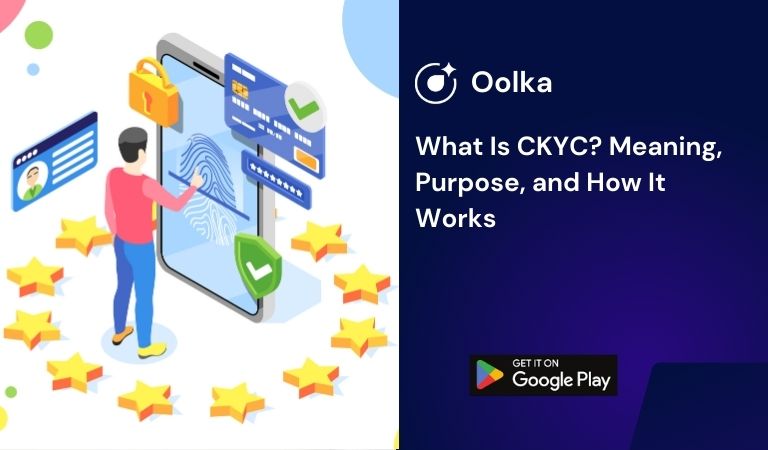
Central Know Your Customer (CKYC) is a centralised KYC system that keeps a customer’s verified identity and address information in one place.
- CKYC lets all authorised organisations use one standard record instead of each bank or financial institution keeping its own separate KYC records. CERSAI is in charge of this system, and it is regulated to make sure that all financial institutions follow the same rules.
- The importance of CKYC becomes clear when viewed against the scale of India’s financial system. When you look at India’s financial system as a whole, you can gauge the need of CKYC. Over the course of their lives, millions of customers deal with many different businesses.
- Without a central system, KYC duplication causes inefficiencies, inconsistent data, and higher risks of not following the rules. CKYC solves these problems by making one place where you can find out who a customer is.
- From the customer’s point of view, CKYC cuts down on paperwork, stops them from having to send in the same documents over and over, and speeds up the onboarding process. From the bank’s point of view, it makes it easier to follow the rules, makes audit trails stronger, and lowers costs.
- CKYC also helps with financial inclusion in a bigger way. CKYC works quietly behind the scenes to help digital banking and paperless onboarding grow in India.
What Is a CKYC Number and How to Get It
Once a person’s KYC information is successfully entered into the CKYC system, they are given a unique 14-digit identification number called a CKYC number. This number puts all of the verified information, like proof of identity, proof of address, a photo, and a PAN, into one CKYC record. In financial documents, the CKYC number and CKYC ID are two different names for the same thing.
Customers don’t have to apply for a CKYC number separately, which is a big deal. When you finish KYC with a bank, NBFC, mutual fund house, or insurance company that is connected to the CKYC registry, it is made automatically. The CKYC record is made, and the unique number is given out once the documents have been checked and uploaded.
This CKYC record is still valid at all places. When you apply for a new financial product, the CKYC number lets the institution get verified information right away instead of having to ask for more documents. This is why many application forms ask for your CKYC number or record; it is a reference to this central identity profile.
If a customer’s information changes, like their address, any regulated institution can change their CKYC record. Then, the system shows the new information everywhere to make sure that everything is the same. This consistency is what makes CKYC a way to prove your identity over time, not just once.
What Is CKYC ID and How It Works
A CKYC ID is simply a reference number that tells a bank or financial institution that your KYC details already exist in a central system. Once your identity and address documents are verified for the first time and uploaded, this 14-digit number gets created automatically. From that point onward, this number becomes your KYC reference across the financial system.
The basic idea behind how it works is simple. When you go to a bank or financial company to get a new product, they first check to see if your CKYC ID already exists by looking at basic information like your PAN. If it does, they look at your current KYC information instead of asking you to send in the documents again. If it doesn’t, they finish the KYC process once and make the CKYC ID for later use.
Most customers are not even aware when their CKYC ID is created—and that’s intentional. CKYC is designed to work quietly in the background. You don’t need to apply for it separately or manage it actively. Its job is to cut down on repetition and make sure that your verified identity stays with you as you switch from one financial product to another.
CKYC in Banks: How It Simplifies Account Management
CKYC mainly solves a practical problem in everyday banking: repetition. Customers used to have to show KYC documents at different times, like when they opened an account, made a deposit, applied for a loan, or even when they switched branches. This happened even though the customer already had an account with the bank.
Banks don’t have to treat every interaction as a new one anymore, thanks to CKYC. Once a customer’s CKYC ID is linked, the same verified information can be used for all of their products. This makes things like opening and closing accounts easier and faster, especially for people who use more than one service with the same bank.
For customers, the benefit is subtle but real. Less paperwork. Less checking in. Fewer reminders asking for papers that have already been sent in. For banks, this means that their records will be cleaner and there will be fewer mistakes between departments or branches. This makes it easier to manage and service accounts over time and makes fewer mistakes.
On the surface, CKYC doesn’t change how banking feels. It just makes things easier in the background, which is what it was made to do.
What is a CKYC Record and How It Is Maintained
A CKYC record is the stored version of your verified KYC information. It includes your identity proof, address details, photograph, and basic personal information. This record stays active after it is created and can be used again whenever it is needed.
The record isn’t set in stone. Details change over time because people move, update their documents, or fix mistakes. When this happens, the CKYC record is updated through a bank or financial institution where the customer already has a relationship. The new information replaces the old information in the central system after it has been checked.
The best thing about it is that the update only happens once, not many times. Customers don’t have to tell each bank separately, and banks don’t have to keep different versions of the same customer’s information. This keeps records consistent and stops people from getting confused later, especially when audits or loan processing are going on.
In practice, most customers never interact directly with their CKYC record. And that’s the point. As long as the information is accurate and updated when needed, the record does its job quietly in the background.
Benefits of CKYC for Customers and Financial Institutions
- The real benefit of CKYC is not that it introduces something new, but that it removes what never needed to exist in the first place—repeated effort. For customers, this shows up as fewer interruptions in routine banking. Once KYC is done properly, it doesn’t have to be done again every time a new product is added or a relationship deepens.
- This is more important than it seems. Missing documents, wrong addresses, or incomplete KYC can cause small delays that hold up loan approvals, investment transactions, or account upgrades. CKYC reduces these friction points by keeping verified information accessible and consistent. Customers notice that their interactions go more smoothly over time, but they don’t consciously link it to CKYC.
- For financial institutions, the benefit is operational clarity. Keeping more than one KYC record for the same customer in different departments makes it more likely that there will be inconsistencies. CKYC helps banks and financial companies rely on a single verified reference, reducing duplication and manual reconciliation, ensuring fewer errors, cleaner records, and less back-and-forth with customers.
- There is also a long-term advantage. As customers use more digital channels and expect faster service, having a reusable KYC foundation makes scaling easier. CKYC supports growth without proportionately increasing compliance workload, which is critical in a high-volume market like India.
How CKYC Helps in Compliance and Reducing Fraud
From a compliance standpoint, CKYC brings standardisation. When identity verification follows a common structure, it’s easier for organisations to meet regulatory requirements without having to make new processes for each product or customer group. This consistency is important during audits, inspections, and internal reviews.
CKYC also closes gaps that fraudsters often use. When KYC systems are broken up, it’s easier for the same person to look different at different places, like having different names, addresses, or documents. A central record limits this fragmentation. Once verified, the same identity is referenced repeatedly, making it harder to manipulate or duplicate.
Traceability is another important part. CKYC makes it easier to see when and how customer information was checked or changed. CKYC isn’t a way to stop fraud on its own, but it does make other risk checks work better.
In a system where millions of accounts are opened and serviced every year, compliance failures are rarely dramatic—they are usually small oversights that add up. CKYC helps reduce those oversights by design, not by enforcement.
Conclusion
Customers were never meant to think about CKYC actively. Its value is in how it quietly makes everyday financial interactions easier. When it works well, there are fewer requests for documents, fewer follow-ups, and fewer delays that don’t have a clear reason for happening.
For customers, CKYC brings continuity. Your verified identity doesn’t reset every time you open a new account or apply for a different product. It makes things more consistent for banks and other financial institutions by making records cleaner, making it easier to be compliant, and leaving fewer loose ends during audits or reviews.
As India’s financial system becomes more digital and interconnected, systems like CKYC become more important. Not because they make things more complicated, but because they make things less so. When identity verification becomes predictable and reusable, both customers and institutions can focus on what actually matters—making informed financial decisions without unnecessary procedural hurdles.
FAQs
1. My account is old. Does that mean I don’t have CKYC at all?
Not necessarily. Many older accounts were opened before CKYC became common. Your bank may need to link your existing KYC to the CKYC system, which is why they sometimes ask for documents again.
2. I never received any CKYC number. How do I find out if I have one?
Most people aren’t told when it’s created. You can check with your bank or while opening a new account—if your details are already available, it usually means a CKYC record exists.
3. I moved cities recently. Do I have to update CKYC with every bank?
No. You update it once through any bank or financial institution you deal with. After verification, the updated address carries forward.
4. Can CKYC be used for things like mutual funds or insurance?
Yes. The same CKYC record is used across banks, mutual funds, NBFCs, and insurance companies. That’s the whole point of having it centralised.