
When you apply for a loan, the real relief comes only when the money finally reaches your account. That moment — when the bank releases the funds — is called loan disbursement. For many borrowers, this is the part they’re most anxious about, mainly because it decides when they can actually start using the loan for their plans, whether it’s paying fees, buying a house, starting a project, or sorting out an urgent expense.
Understanding how disbursement works makes the loan journey feel less confusing and makes it clearer. It shows you what to expect, how much time will be required, and what small steps can speed it up. Once you are familiar with the flow, the process becomes smoother, and you’re much better prepared for your next move.
What is loan disbursement?
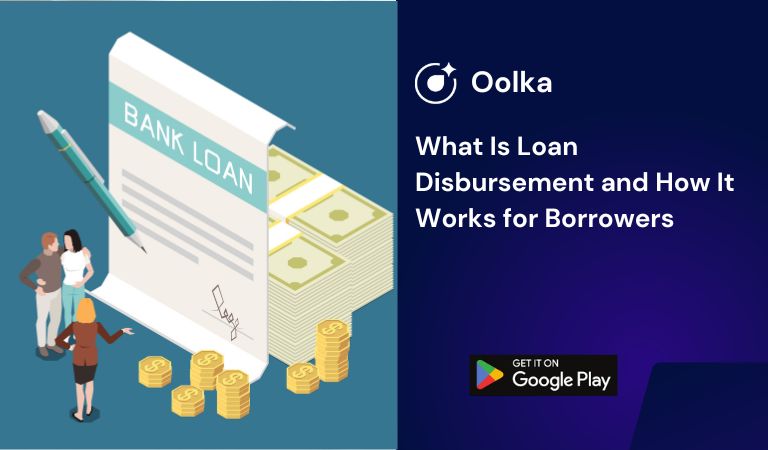
Loan disbursement is the point at which the lender gives you the accepted loan amount, either directly to you or to the seller or service provider, depending on the type of loan. In simple terms, it’s the time when the lender says, “Everything looks good—here’s your money.”
Most of the time, the money for personal or business loans flows right into your bank account. The bank may provide you the money in instalments, or in phases, as the project or course progresses, for housing or education loans.
Before giving you the money, the lender checks your identity again, goes over the agreement you signed, and makes sure that all the conditions for approval have been met. After this is done, the money is sent. Sometimes it happens all at once, and other times it happens in stages.
Types of Loan Disbursement
Loan disbursement isn’t the same for all types of borrowing. Lenders use the following methods based on the purpose of the loan:
1. Full Disbursement
The entire loan amount is transferred in one go. This is usually done for:
- Personal loans
- Loans for business
- Gold loans
- Credit for small purchases
It’s fast, easy, and perfect when you need money right away.
2. Partial or Phased Disbursement
Some loans need money to be released in parts instead of all at once. This happens when the lender wants to ensure the funds are used for specific milestones, such as:
- Home construction loans (released as construction progresses)
- Loans for education (given out every semester or year)
- Renovation or project-based loans
Each phase is released after confirming documents, progress, or the fee demand.
3. Direct Vendor/Institute Disbursement
Some loans don’t send you the money directly. It goes to the:
- Builder (for loans to build homes)
- College or university (for education loans)
- Dealer or vendor (for loans for cars or equipment)
This reduces misuse and assures the lender that the funds are used exactly as intended.
4. Top-Up Disbursement
If you take a top-up loan on an existing loan, the lender directly credits the extra approved amount into your account after minimal paperwork.
Factors affecting loan disbursement time
Even after your loan gets approved, the money doesn’t reach your account instantly. A few things influence how quickly lenders can release the amount. One major factor is how complete your documents are. The lender may take longer to check if anything is missing or confusing. Another reason for the delay is that banks need to double-check ownership and legal paperwork before giving out money for secured loans.
The particular lender’s internal processes also play a role. Some send out the money within hours, while others may take days. Weekends, holidays, or applying outside working hours can push the disbursement to the next business day. When you get a loan for education or a home, the money usually goes straight to the institution or seller, which makes things even more complicated. All of these little things together will determine how quickly the loan amount gets to you.
Documents required before loan disbursement
Before the bank can give you the money, they need to check that all of your paperwork is in order. This usually includes your basic KYC documents, such as your PAN, Aadhaar, and proof of address. Lenders also ask for recent bank statements to make sure that your income is steady and that you are handling your money well. If you work for someone else, you may need to show your most recent pay stubs or proof of employment. If you are self-employed, they may ask for GST records, income tax returns, or proof of business.
For secured loans, you need to show more paperwork, like property papers, proof of ownership, NOCs (if needed), and valuation reports. Having all these documents ready not only speeds up the process but also removes the risk of last-minute back-and-forth with the lender.
Common reasons for loan disbursement delays
The money may not come out as soon as you think, even if the loan is approved on time. Most of the time, the delay isn’t because of one big problem, but because of a lot of little ones that make things take longer. Sometimes, the bank is still waiting for a missing document — a signature here, a proof there. If the information in your application doesn’t match your KYC records, the lender may need more time to check it.
Loans for property are often disbursed late because the legal or technical checks take longer than expected. Lenders may hold off on giving you the money for a business or personal loan until they have finished checking your income properly. And on busy days, internal processing at the bank can simply be slower. These delays are annoying, but you can avoid most of them by having your paperwork ready and responding to the lender’s requests quickly.
Processing fees and charges during disbursement
When the loan is finally ready to be sent out, the lender makes a few changes to the fees before sending the money to your account. The most common is the bank’s cost for reviewing your application, which is the processing fee. Some lenders subtract this amount directly from the final amount, while others collect it up front.
There may also be small fees for handling documents, stamp duty, insurance (for secured loans), or checking the loan’s technical and legal status, depending on the type of loan. These aren’t hidden charges; they’re part of the overall loan process, but borrowers sometimes forget about them. It is a good idea to carefully read the loan offer so you know exactly what will be deducted, and there won’t be any surprises when the money hits your account.
Can a loan be cancelled after disbursement?
Once the loan amount has been released into your account (or directly to the seller or institution), cancelling it becomes very difficult. For most lenders, disbursement is the final step, and the bank has already created the loan account in your name. If you change your mind afterwards, you usually have only one option: repay the amount immediately, along with any charges that may apply.
Some lenders may consider cancellation before the amount is credited, but after disbursement, the loan is treated as “active.” So, it’s always better to clear any doubts, review the terms carefully, and make sure you’re comfortable before you sign the agreement.
Conclusion
The loan disbursement is when all the paperwork and waiting finally pay off, and you get the money you asked for. When things go smoothly, it can be a huge relief, especially if you need money for things like admission fees, home payments, or medical bills. But things can also take longer, usually because of missing papers, verifications that are still being processed or last-minute changes or updates.
Knowing how disbursement works, what lenders look for, and what charges apply can help you avoid a lot of stress. It also helps you stay prepared so the loan reaches you faster and without surprises. With the right information, borrowers can get through this stage with more confidence and make better choices about their money.
FAQs
1. Will I know before the loan is disbursed?
Most lenders will send you an SMS, email, or app notification before they give you the money. Some even send you a final summary of your loan details to confirm.
2. Is it possible that the given amount is different from what I applied for?
Yes. Sometimes, lenders will approve a little less money based on your income, credit history, or their own policies.
3. Does disbursement always happen in one go?
Not necessarily. For home loans, education loans, and business loans, the amount may be released in stages depending on the project progress or college fee schedule.
4. Can a loan really be cancelled after disbursement?
Yes, but only in rare cases and usually by the lender, such as when incorrect information is discovered. For borrowers, cancellation after disbursement is difficult because the amount has already been credited.
5. If I decide not to take the loan before it is given out, will I have to pay?
Even if you back out before the loan is released, many lenders will still charge you a small processing fee or administrative fee.